Best 10Gb Network Switches Under $200 (2026)
True 10GBase-T vs. 2.5G uplink combos — tested for heat, packet loss, and long-term reliability
Verdict: Quick Picks
Top recommendations at a glance
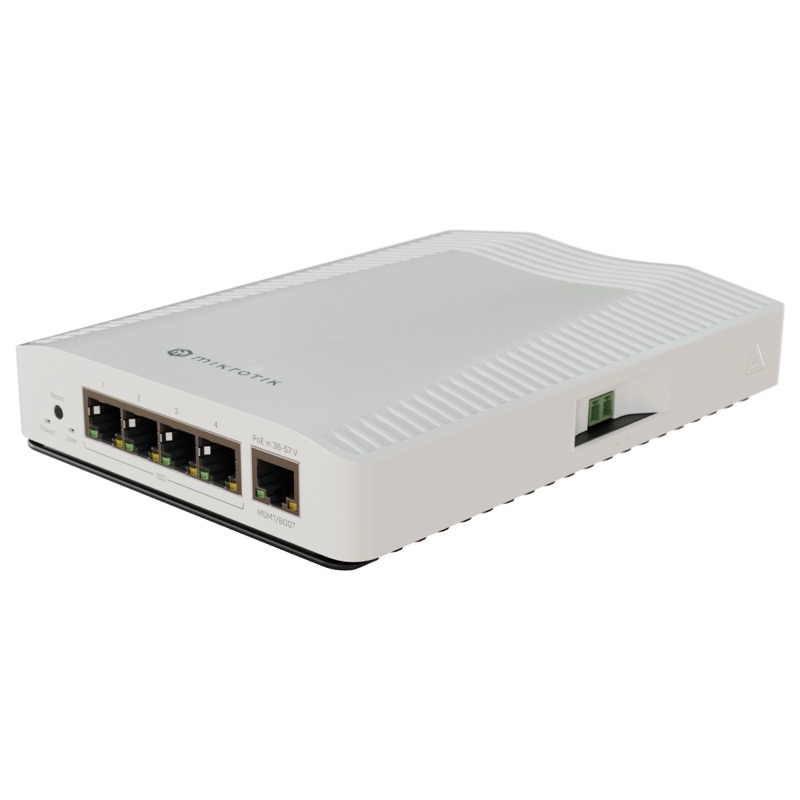
MikroTik CRS304-4XG-IN
$178- True 10GBase-T on all 4 data ports — just use Cat6a cables, no SFP+ modules
- Highest Amazon rating in the category (4.7/5, 85% five-star)
- ServeTheHome 'must-have' designation — strong professional endorsement
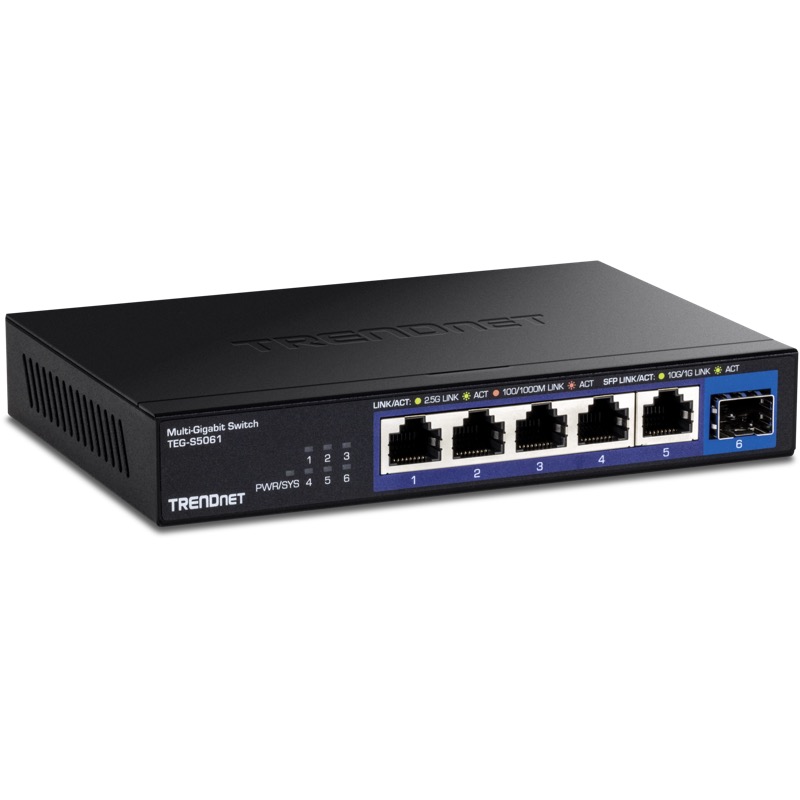
TRENDnet TEG-S5061
$50- Lifetime warranty (US & Canada) — best support commitment in the roundup
- 749 Amazon reviews — most proven track record of any candidate
- Plug-and-play unmanaged — zero configuration required
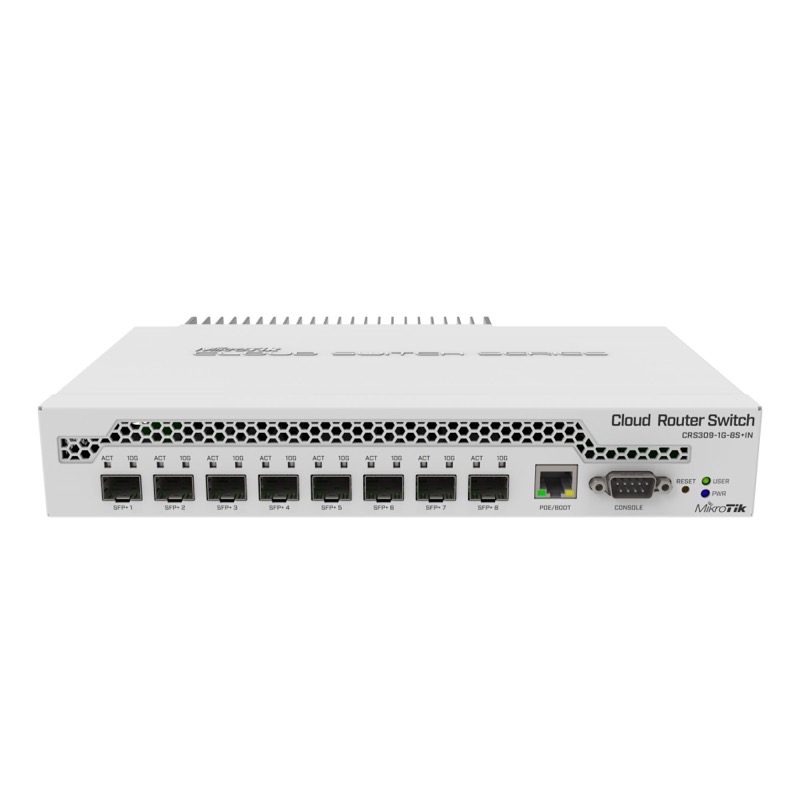
MikroTik CRS309-1G-8S+IN
$238- 8x 10G SFP+ ports — most 10G ports of any switch in this roundup
- ServeTheHome 9.4/10 — highest professional review score
- Only 12W idle power — incredibly efficient for 80 Gbps switching capacity
The 10G Home Network Is Finally Affordable
For years, 10 Gigabit Ethernet was data-center-only territory — switches cost $500+ and ran hot enough to heat a small room. That’s changed. Multi-gig switches have crashed below $200, and some true 10GBase-T options are now within reach of anyone running a NAS, a home lab, or just sick of waiting for large file transfers.
But “affordable” doesn’t mean “good.” This category is flooded with white-label rebrands from Shenzhen factories, switches that overheat under sustained load, and products where your configuration vanishes every time the power blinks. We dug through hundreds of reviews, cross-referenced professional test results from ServeTheHome, and filtered out the noise.
The short version: if you want real 10G between devices, the MikroTik CRS304-4XG-IN is the only sub-$200 switch worth buying. If you just need a 10G uplink to one fast device and 2.5G for everything else, the TRENDnet TEG-S5061 is the safe, boring, correct choice.
What “10G Switch” Actually Means (And Why Most Aren’t)
A critical distinction that marketing departments love to blur: most “10G switches” in this price range are actually 2.5G switches with a single 10G SFP+ uplink port. That means your devices talk to each other at 2.5 Gbps, and only the connection to your NAS or server gets the full 10G — if you buy a separate SFP+ transceiver module.
True 10GBase-T switches give you 10G on every RJ45 port. You plug in a Cat6a cable and get 10 Gbps, period. No transceivers, no fiber, no extra cost per connection.
In this roundup:
- True 10G on all ports: MikroTik CRS304 (4x 10GBase-T), MikroTik CRS309 (8x 10G SFP+)
- 2.5G + 10G uplink: TRENDnet TEG-S5061, NUBASA, SODOLA
Know which type you need before shopping.
What We Looked For
Reliability above all. A switch that drops packets or throttles under heat is worse than no switch at all. We prioritized:
- Thermal stability — fanless designs must actually handle sustained 10G loads without throttling
- Packet integrity — zero tolerance for dropped packets under normal operation
- Firmware stability — settings that persist across reboots (you’d think this is a given)
- Review volume and age — products with hundreds of reviews over 6+ months tell a real story
- Professional validation — ServeTheHome lab testing carries more weight than Amazon star counts
The Top Pick
MikroTik CRS304-4XG-IN — The Only Sub-$200 True 10GBase-T Switch
This is the switch that finally makes 10G practical for home networks. Four ports of real 10GBase-T — plug in Cat6a cables and get 10 Gbps per device. No SFP+ modules, no transceivers, no fiber, no extra cost per connection.
ServeTheHome — the gold standard for network hardware reviews — gave this a “must-have” designation, which they don’t hand out casually. Amazon reviewers are similarly enthusiastic: 4.7 stars with 85% five-star ratings and zero two-star reviews. That’s an unusually clean distribution.
The engineering is solid. Passive cooling keeps it completely silent at only 15.7 watts under full 10GbE load. Four power input methods (PoE-in, two DC barrel jacks, and a 2-pin connector) give you redundancy options that enterprise switches charge a premium for.
The catch: four data ports. If you need 10G for five or more devices, this isn’t enough. And RouterOS, while powerful, has a learning curve that multiple reviewers describe as “not intuitive” — budget a few hours for initial setup. One reviewer candidly reported needing three days.
Who this is for: anyone connecting 2-4 devices (NAS, workstation, server, maybe a second machine) at 10G speeds. That covers most home labs and power-user setups.
The Safe Budget Option
TRENDnet TEG-S5061 — 2.5G With a 10G Uplink
If you don’t need 10G between all devices — just a fat pipe to your NAS while everything else runs at 2.5G — this is the pick. At $50 with a lifetime warranty and 749 Amazon reviews, it’s the most proven option in the roundup.
TRENDnet is a real networking brand with real support. If a unit arrives dead or develops issues in year three, you’ll get a replacement. That’s not something you can say about NUBASA or SODOLA.
It’s unmanaged, which means zero configuration: plug it in, connect cables, done. No web interface to learn, no firmware to update, no settings to accidentally lose. For the overwhelming majority of home users, this simplicity is a feature.
Why not higher rated: it’s not actually a 10G switch. The five RJ45 ports max out at 2.5 Gbps. Only the single SFP+ port does 10G, and you’ll need to buy an SFP+ module separately. The 6% one-star rate is also above average, though with 749 reviews the absolute failure rate is still low.
The Enthusiast’s Choice
MikroTik CRS309-1G-8S+IN — Eight Ports of 10G SFP+
If you’re building a serious home lab with fiber infrastructure, this is the switch professionals reach for. ServeTheHome rated it 9.4 out of 10. Eight SFP+ ports mean eight devices at 10G, with 80 Gbps of switching capacity, all in a fanless package that sips 12 watts at idle.
The critical caveat: do not use copper SFP+ transceivers in this switch. A Spanish-language reviewer documented “unsustainable temperatures” when using RJ45 modules — the passive cooling simply can’t dissipate the heat that copper transceivers generate. Use fiber optics or DAC (Direct Attach Copper) cables instead.
With DAC cables at $10-15 each between nearby devices, the total cost becomes reasonable. With copper transceivers at $25-30 each, you’re looking at $337+ for four connections and a switch that runs dangerously hot.
At $238 it’s over our budget, and the SFP+ module cost pushes it further. But for fiber-ready setups, nothing else in this price range comes close.
The Budget Gamble
NUBASA 6-Port — $38 and a Prayer
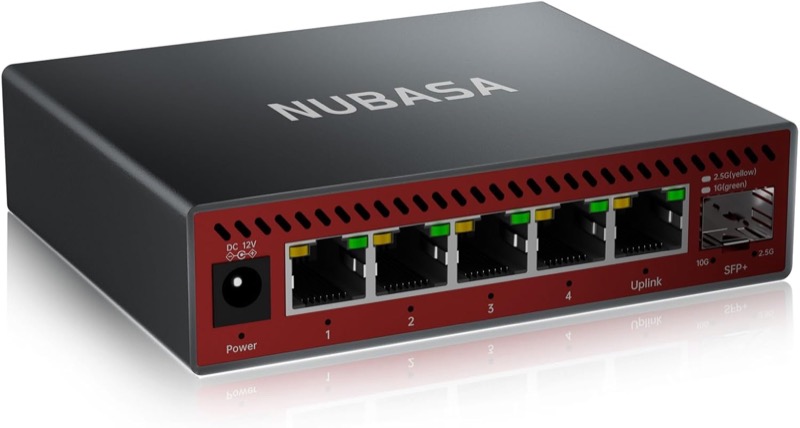
At $38, this is the cheapest way to get any form of 10G connectivity into your network. An aluminum fanless case, 5x 2.5G RJ45 ports, and a single 10G SFP+ uplink. It works on existing Cat5e cabling for the 2.5G connections.
But NUBASA is a brand that exists only on Amazon. No company website, no other products, no track record. The product has been available for three months with 46 reviews. One reviewer reports “tons of dropped packets” — exactly the kind of issue our user asked us to screen for.
The metal case also has sharp edges that one reviewer says “can easily cut one’s fingers.” Not a reliability concern, but it speaks to the level of manufacturing polish.
Our recommendation: only consider this if $38 is your hard ceiling and you’re connecting non-critical devices. For anything that matters — a NAS with irreplaceable data, a workstation mid-transfer — spend the extra for the TRENDnet or save for the MikroTik.
The One to Avoid
SODOLA 5-Port Managed — A MokerLink in Disguise
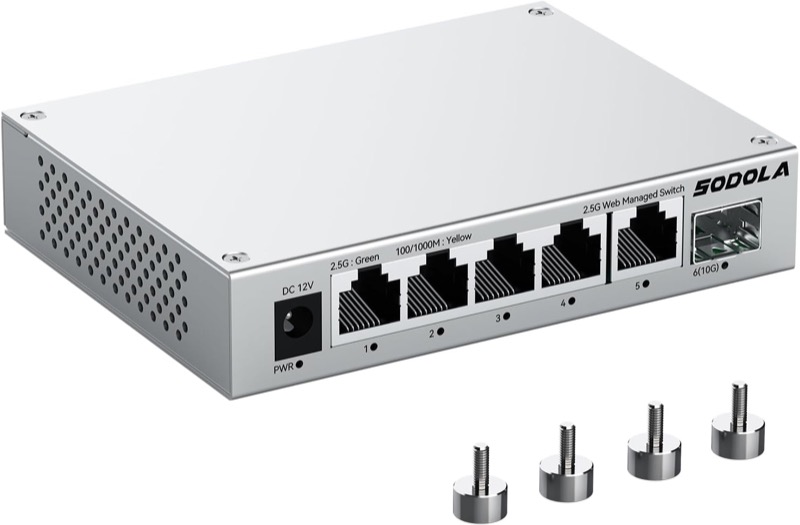
On paper, a managed 2.5G switch with VLANs, QoS, LACP, and a web interface for $53 sounds excellent. In practice, this is a confirmed white-label rebrand of MokerLink hardware — one reviewer documented identical firmware with SODOLA branding slapped on top.
The fatal flaw: settings don’t persist after a reboot. The web interface has an “Apply” button that activates your changes, but a separate, undocumented “Save” button in a different menu is required to write them to flash. Miss that step, and a power cycle wipes your entire configuration. Multiple reviewers discovered this the hard way.
With the highest one-star rate of any candidate (9%), thermal throttling reports, and a manufacturer listed as “Shenzhen Hongyavision Technology Co., Ltd.” with no meaningful brand presence, this is exactly the kind of product we’re here to warn you about.
Notable Mention: Hasivo S600W-5XGT-1SX-SE
Not in our original candidate list, but discovered during research via ServeTheHome. This switch offers 5x 10GBase-T ports plus 1x SFP+ — more 10G ports than the CRS304 at a similar ~$195 price point.
The trade-off: it has dual 40mm fans (not silent), is missing regulatory safety markings according to ServeTheHome’s review, and uses a Realtek chipset (generally regarded as lower-tier than the Marvell silicon in MikroTik products). Worth considering if you need five or more 10G ports and don’t mind fan noise, but we’d wait for the regulatory situation to clarify before recommending it outright.
The Bottom Line
The 10G home switch market in 2026 splits cleanly into two tiers:
Under $50: you get 2.5G between devices with a single 10G uplink. The TRENDnet TEG-S5061 is the only one we’d trust here. Skip the no-name brands.
Under $200: the MikroTik CRS304-4XG-IN is the singular standout — the only switch offering true 10GBase-T on all ports at this price. Accept the four-port limitation and the RouterOS learning curve, and you get a switch that ServeTheHome calls “must-have” for a reason.
Over $200: the MikroTik CRS309 is exceptional for SFP+ setups, but only if you’re running fiber or DAC cables. Copper transceivers and this switch do not mix.
Everything in between is either rebranded factory hardware with reliability problems (SODOLA), too new to trust (NUBASA), or better served by one of the MikroTiks.
Analysis: Product Breakdown
Individual teardown and verification results
MikroTik CRS304-4XG-IN
- True 10GBase-T on all 4 data ports — just use Cat6a cables, no SFP+ modules
- Highest Amazon rating in the category (4.7/5, 85% five-star)
- ServeTheHome 'must-have' designation — strong professional endorsement
- Completely fanless and silent — passive heatsink cooling at only 15.7W
- Multi-gig auto-negotiation (1/2.5/5/10 Gbps per port)
- RouterOS included — full VLAN, trunking, and L2 management
- Four power input methods including PoE for redundancy
- Only 4 data ports plus 1x 1G management — may be limiting for larger setups
- Ships with non-US power adapter (need a plug adapter or replacement)
- RouterOS has a steep learning curve — multiple reviewers needed days to configure
- Management port is 1G, not 10G — wastes a port if you need it for data
- Gets warm under load (expected for passive cooling, but worth noting)
- Only 53 Amazon reviews — product is relatively new (December 2024)
TRENDnet TEG-S5061
- Lifetime warranty (US & Canada) — best support commitment in the roundup
- 749 Amazon reviews — most proven track record of any candidate
- Plug-and-play unmanaged — zero configuration required
- NDAA/TAA compliant (government procurement eligible)
- Compact metal case, fanless, silent operation
- Backwards compatible with 10/100/1000 Mbps devices
- Not a true 10G switch — 5x 2.5G ports with only 1x 10G SFP+ uplink
- SFP+ module sold separately (add ~$25-30 for a 10G copper transceiver)
- 6% one-star rate — highest among budget options (quality control tail)
- Runs warm per multiple reviewers (normal for fanless, but noted)
- No management interface — can't configure VLANs or QoS
MikroTik CRS309-1G-8S+IN
- 8x 10G SFP+ ports — most 10G ports of any switch in this roundup
- ServeTheHome 9.4/10 — highest professional review score
- Only 12W idle power — incredibly efficient for 80 Gbps switching capacity
- Completely fanless with dual heat-pipe cooling
- Dual power input (DC + PoE) for redundancy
- 6 years on market, 364 reviews — well-proven product
- RouterOS + SwOS dual-boot for flexible management
- Over budget at $238 before SFP+ modules
- Copper SFP+ transceivers generate dangerous heat — reviewer: 'unsustainable temperatures, must use fiber'
- Total cost with 4 copper modules: $337+ (switch + transceivers)
- Configuration 'not for the light of heart' — 3-day setup reported
- Only cost-effective with DAC cables ($10-15 each) between close devices
- Blinding blue power LED (community fix: kapton tape)
NUBASA 6-Port 2.5G + 10G SFP+
- Cheapest option at $38 — less than a quarter of the top pick
- Aluminum fanless design, completely silent
- 6 ports (5x 2.5G RJ45 + 1x 10G SFP+)
- Works over existing Cat5e cabling for 2.5G speeds
- Unknown brand with zero track record — no company website found
- Only 46 reviews, product is 3 months old — insufficient reliability data
- Reviewer reports 'tons of dropped packets between 2.5G PC and printer'
- Sharp metal case edges — reviewer warns it 'can easily cut fingers'
- Not a true 10G switch — only the SFP+ uplink is 10G
- SFP+ module not included
SODOLA 5-Port 2.5G Managed
- Cheapest managed switch in the roundup ($53 for VLAN/QoS/LACP)
- Magnetic mounting feet for flexible placement
- Web management UI (no CLI required)
- Confirmed white-label rebrand of MokerLink — same firmware with SODOLA stickers
- Settings don't persist after reboot — requires hidden 'apply then save' sequence
- Highest one-star rate at 9% — worst reliability signal of all candidates
- Thermal throttling reported by multiple users
- Not a true 10G switch — 2.5G with SFP+ uplink
- Manufacturer 'Shenzhen Hongyavision Technology' — no meaningful brand presence
Research Methodology
Products identified from Amazon bestseller lists, home networking communities, and ServeTheHome professional reviews. Pricing and specifications verified against live Amazon listings on 2026-02-20. Review analysis based on embedded Amazon reviews (critical review pages returned CAPTCHAs). Professional reviews sourced from ServeTheHome. No manufacturer samples or sponsorships — all products evaluated at retail pricing.