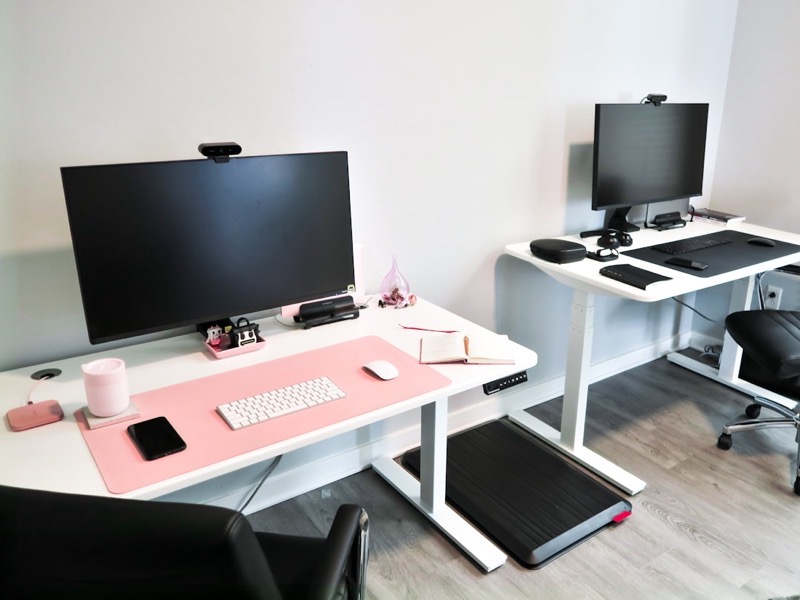
Photo by Unsplash
The Engineer's Guide to Standing Desks: What's Actually Inside Them
We traced the motors, measured the wobble, and calculated the real-world load. The most marketed desk might be the least stable.
Verdict: Quick Picks
Top recommendations at a glance
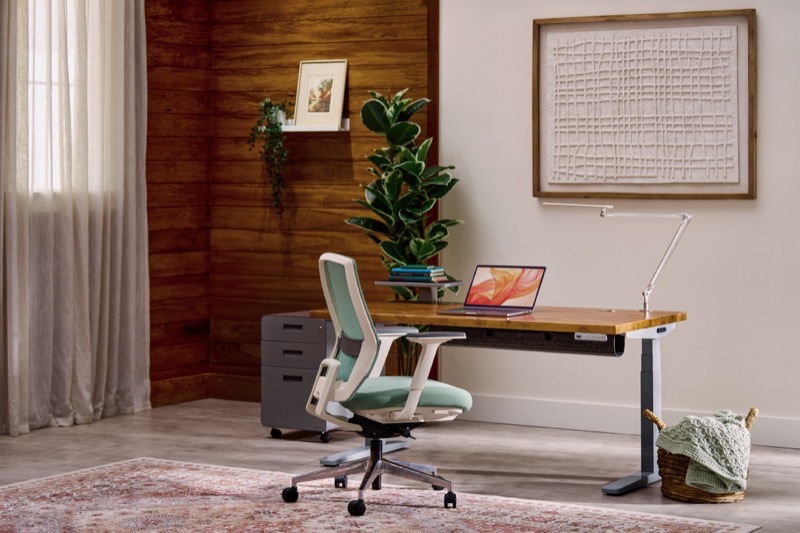
Uplift V2/V3
$599- Jiecang dual motors with modular M8 mounting and JST-PH connectors enable field replacement in under 20 minutes
- 355 lb weight capacity with minimal speed degradation under load (BTOD confirmed consistent 1.33 in/sec)
- 38 dB noise level is the quietest in class, measured by standingdeskpicks.com
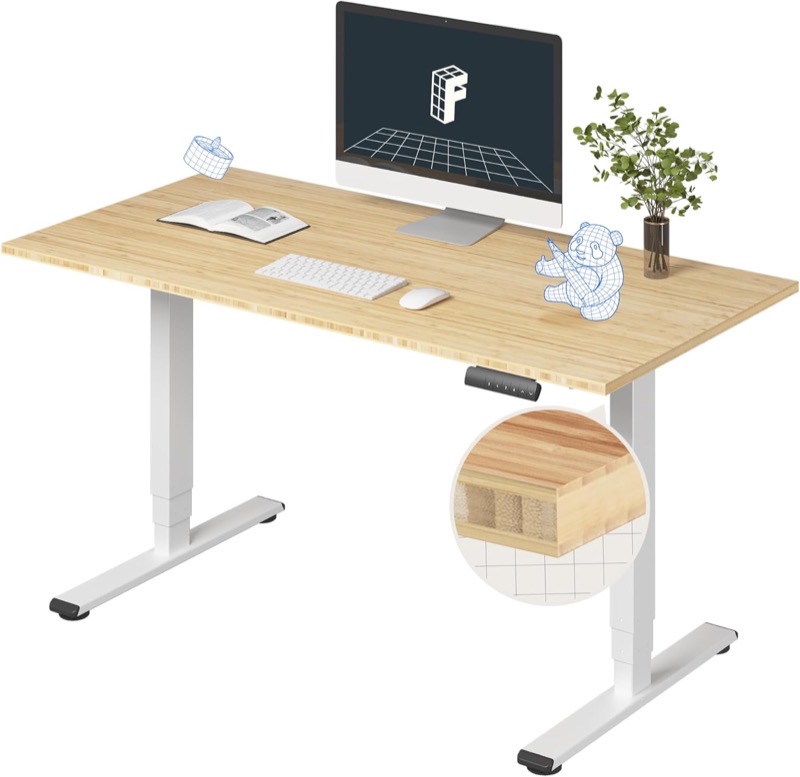
FlexiSpot E7 Pro
$500- 440 lb weight capacity is the highest among consumer standing desks
- Enclosed dual motors hidden inside columns protect against dust and debris
- USB-A charging port integrated into the keypad at no extra cost
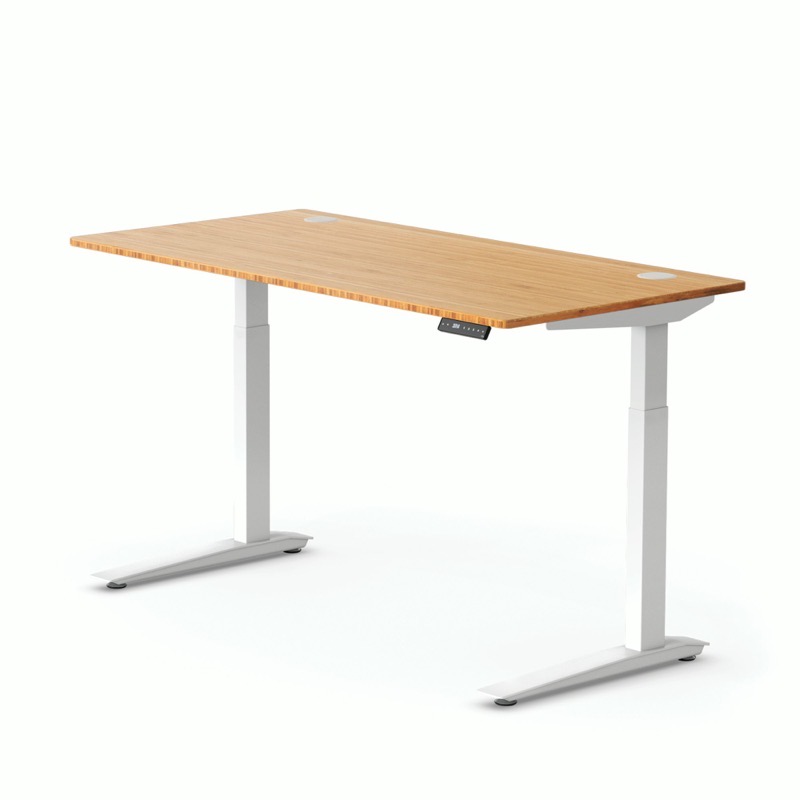
Fully Jarvis
$649- Owned by Herman Miller/MillerKnoll since 2021; strong customer service reputation
- Bamboo desktop option is genuinely popular and aesthetically distinctive
- 350 lb weight capacity handles heavy multi-monitor setups
The Motor Inside Your Desk
Every standing desk review tells you about height range, weight capacity, and desktop finishes. Almost none tell you who actually makes the motor. This matters because the motor determines how long your desk lives, how loud it is during transitions, and whether it can handle your equipment without slowly burning out its gear train.
Your $3,000 workstation thinks it has a bodyguard. That standing desk frame with “dual motors” and a “355 lb capacity” from a brand you trust? The motors inside were almost certainly manufactured by one of six companies, and the brand on the label probably never touched the engineering.
The standing desk market is a white-label ecosystem. Brands design desktops, keypads, and marketing. The motors, columns, and control boxes come from a small cluster of OEM suppliers. Understanding who makes what is the fastest way to cut through the noise.
The Motor OEM Map
Six motor manufacturers power virtually every consumer standing desk on the market. Their engineering determines your desk’s lifespan, noise profile, and behavior under load.
Jiecang (China) is the most common OEM in the consumer market. They manufacture the dual-motor systems inside the Uplift V2/V3, GeekDesk, and EvoDesk, among many others. Jiecang produces inline column motors and is one of the largest standing desk frame manufacturers globally. Their frames are white-labeled by dozens of brands. The quality is solid and well-tested across millions of units.
Ketterer (Germany) builds the single motor inside the VertDesk v3. BTOD, which manufactures the VertDesk, calls it “the strongest of all single motor systems we have tested.” In their lab, a Ketterer motor lifted 350 lbs at 1.27 inches per second with the overload protection disabled. German precision engineering with high-quality gear components.
Linak (Denmark) is the gold standard. Their DESKLINE platform powers the UpDesk Elements, XDesk Terra, and various commercial-grade systems. Linak publishes both static and dynamic load ratings (most manufacturers only publish static). They offer firmware updates and fleet management for commercial deployments. If your office building has motorized desks, they probably run Linak.
TiMOTION (Taiwan/China) is the budget OEM. BTOD found them to produce “some of the least dependable electronics available on the market.” The original VertDesk v1 used TiMOTION electronics and suffered from buzzing control boxes. BTOD switched to Ketterer for the v2 and v3 specifically because of reliability failures.
LogicData (Austria) manufactures premium controller and motor systems used in commercial-grade desks. BTOD includes them alongside Linak, Ketterer, and OMT (Oelschlager Metalltechnik, also German) among the best component manufacturers in the industry.
Bosch (Germany) powers the IKEA BEKANT. Despite the brand prestige, their desk motors performed poorly in BTOD testing. Speed dropped from 1.25 inches per second unloaded to 0.33 inches per second at 150 lbs. BTOD called it “one of the most odd dual motor desks we have tested.” The Bosch name does not guarantee Bosch quality in this application.
The pattern is clear. BTOD summarized it well: “Motorized standing desks have been around a long time and the manufacturers of the best components are located in Europe. Only within the last five to six years have the Chinese manufacturers begun to produce the motors, gears, and other electronics found in most motorized desks.”
Brushed vs. Brushless: The Lifespan Gap
Most consumer standing desks use brushed DC motors. A smaller number use brushless DC motors. The difference in longevity is substantial.
Brushed motors use carbon brushes that physically contact the commutator to transfer current. These brushes wear down over time. Typical lifespan: approximately 15,000 full-height cycles at rated load, with noise levels above 52 dB. Most operate on a 10% duty cycle (2 minutes on, 18 minutes off) per IEC 60034-1 standards.
Brushless motors eliminate the physical contact. No carbon brushes means no brush wear. The German Institute for Ergonomics rates brushless systems at 38,000 to 45,000 cycles at 80% rated load, with noise below 45 dB.
At a typical home office rate of 4 transitions per day, brushed motors last roughly 10 years. Brushless motors last 25 or more. The BIFMA minimum standard requires 12,000 full cycles without failure, which translates to about 10 years at twice-daily use.
Here is the detail nobody mentions: partial cycles are more taxing than full-range movements. Micro-adjustments of 1 to 2 inches generate inrush current surges that stress the motor more than a smooth full-range transition. If you fidget with your desk height throughout the day, you are wearing the motor faster than the cycle-life rating suggests.
The Real-World Load Calculator
Every manufacturer publishes a weight capacity. Almost none explain what that number actually means in practice.
Manufacturers typically rate for static load: the desk holding still with weight on it. The number you need is dynamic load: the motor lifting your equipment while you lean on the desk, bump it reaching for your coffee, and apply asymmetric force through a monitor arm cantilevered 20 inches off the back rail.
The calculation, derived from OEM engineering articles on Alibaba and Eureka Ergonomic, uses two multipliers:
Asymmetry multiplier (1.4x): A monitor arm extending 20 inches from the front rail can multiply torque demand by up to 2.5x at the attachment point. The 1.4x factor accounts for typical uneven weight distribution across the desk surface.
Dynamic multiplier (1.2x): Bumping the desk, leaning on it, or setting down a heavy object while the motors are running adds transient loads beyond the static equipment weight.
Example: Mac Studio power user setup
- Mac Studio: 6 lbs
- 2x 27-inch monitors: 36 lbs (18 lbs each)
- Dual monitor arm: 10 lbs
- Desktop (60x30 laminate): 50 lbs
- Peripherals, speakers, miscellaneous: 15 lbs
- Base load: approximately 117 lbs
- After asymmetry (x1.4): 164 lbs
- After dynamic factor (x1.2): 197 lbs effective motor demand
A desk rated at 200 lbs would be running at the ragged edge of its capacity with this setup. The speed would degrade, the motors would run hotter, and the duty cycle would become a real constraint.
The rule of thumb: buy a desk rated for at least 50% more than your base equipment weight. For the Mac Studio setup above, that means 250 lbs minimum. The Uplift V2 at 355 lbs and the FlexiSpot E7 Pro at 440 lbs both clear this with margin. The Autonomous SmartDesk Pro at 310 lbs clears it on paper but BTOD found significant speed degradation as load approaches the rated maximum.
Stability: The BTOD WobbleMeter
BTOD.com created the WobbleMeter, the only standardized, objective measurement tool for standing desk stability. The test setup: 50 lb dumbbell placed at back-center of a 30x48 standardized top, measured at 30, 42, and 46 inch heights. The tool measures front-to-back rocking and side-to-side wobble deflection.
Lower scores mean more stability. Here is how the desks in this roundup performed:
NewHeights XT: 82 (most stable desk BTOD has ever tested, included for reference). Wobble deflection was less than half the nearest competitor.
IKEA Idasen: 114 (surprisingly stable for the price, 4th most stable ever tested).
VertDesk v3: 116 (3rd most stable, German Ketterer motor, single external motor design).
Uplift V2 Commercial: 132 (solid stability with crossbar, good lateral performance at mid-heights).
VariDesk ProDesk 48: 130 (2nd most stable BTOD tested, but low weight capacity and short warranty).
Autonomous SmartDesk Pro: worst in class. Total wobble deflection of 18 at 30-inch sitting height versus the Uplift V2’s 9. Nearly double the wobble at the lowest, most stable height. At standing heights, the gap widens further.
The Crossbar Factor
The single most important stability component is the crossbar: a horizontal beam connecting the two legs. Eureka Ergonomic calls it “one of the most overlooked components.” Desks without crossbars must compensate with thicker steel, deeper feet, and higher-precision columns, and most do not compensate enough.
Other stability factors, in order of impact:
- Leg shape: Three-stage legs are more stable than two-stage. Rectangular steel tubes resist torsion better than round or oval profiles.
- Foot depth: Longer feet provide a more stable base, especially on hard floors.
- Desktop weight: Heavier tops (butcher block, solid wood) add inertia that dampens vibration.
- Floor surface: Hard floors grip better than carpet. If your desk wobbles on carpet, try anti-vibration pads under the feet.
One factor that does not matter much: frame width. BTOD tested a 48-inch versus 72-inch wide VertDesk and found 16 of 18 stability scores were within 1 point. Width is irrelevant to wobble.
The Marketing BS Detector
“600 lb Capacity”
No consumer standing desk motor system is engineered for 600 lbs of dynamic load. When you see extreme capacity claims, ask: is that static load (desk holding still) or dynamic load (desk moving)? Most published numbers are static. The motor’s ability to lift that weight consistently, at rated speed, without overheating on a 10% duty cycle, is a different question entirely. BTOD’s lab testing consistently shows speed degradation well before the rated maximum on most desks.
“Medical Grade Frame”
There is no medical grading standard for standing desk frames. The relevant standard is ANSI/BIFMA X5.5, which covers desk stability, durability, and structural adequacy for commercial furniture. A desk is either BIFMA certified or it is not. “Medical grade” is marketing language.
“Whisper Quiet Motors”
Meaningful only with decibel measurements. The Uplift V2 at 38 dB is genuinely quiet (roughly the level of a quiet library). The Autonomous SmartDesk Pro at 59 dB is closer to a normal conversation. That is a perceptible, significant difference. Any desk claiming quiet operation without publishing dB measurements is hiding the number.
“Dual Motor = Better”
Not necessarily. Dual motors distribute wear and provide faster, more even lifting. But as BTOD observes: “An electric standing desk with two motors actually needs both to function properly. If one of the two motors dies, the desk will only go up on one side. So technically speaking, you now have two opportunities for a motor to fail.” Single external motors (like the VertDesk’s Ketterer) are easier and cheaper to replace. The VertDesk v3 with its single motor scored better on stability than several dual-motor desks.
Cable Management: The Forgotten Spec
Standing desks move. Cables do not stretch. This mismatch causes two problems: cable snags during height transitions and visual chaos on what should be a clean workspace.
Eureka Ergonomic warns that “cables that are too short or snagged under the desk during an upward transition create an immediate, asymmetric downward force. This snag load can exceed the motor’s ability to compensate, leading to premature gear failure.”
For a Mac Studio or multi-monitor setup, monitor arms are critical. They consolidate cables and reduce the dynamic mass the motors must lift. Eureka notes they reduce motor strain by up to 30% compared to monitors on heavy stands.
The minimum cable management kit for any standing desk: a cable chain or spine (accordion-style, extends with height changes), under-desk cable tray, and velcro ties. If your desk does not include these, budget $30 to $50 for third-party solutions. The Uplift V3 improved cable routing over the V2, but the optional cable management kit ($49) should arguably be standard at the $599 price point.
Why Uplift Wins
The Uplift V2/V3 is not the cheapest desk, nor the most stable (that is the VertDesk v3 or the commercial-grade NewHeights XT), nor the highest capacity (that is the FlexiSpot E7 Pro at 440 lbs). It wins because the data converges from every direction.
Wirecutter has picked it for 9 consecutive years. CNET scored it 9.3 out of 10. Business Insider named it the overall top pick. BTOD’s WobbleMeter shows solid stability with a crossbar. The Jiecang dual motors have millions of units in the field with known reliability profiles. The 15-year V3 warranty covers frame, motor, and electronics. The 38 dB noise level is the quietest measured. The modular motor assemblies with standardized M8 mounting and JST-PH connectors mean field replacement in under 20 minutes if a motor ever does fail.
The FlexiSpot E7 Pro earns runner-up on value. At $500 with a 440 lb capacity, it handles the heaviest setups at the lowest price. The enclosed motor design protects against dust. The USB charging port in the keypad is a thoughtful inclusion. The main weakness is transparency: FlexiSpot does not disclose their motor OEM, and the product lineup (E7, E7 Pro, E7 Plus, E7 Max) is needlessly confusing.
The VertDesk v3 is the engineer’s dark horse. A German Ketterer motor, made in the USA, with the 3rd best stability score BTOD has ever recorded. It loses points on capacity (275 lbs) and speed (single motor), and the $700 price is hard to justify when the Uplift V2 starts at $599 with a higher capacity. The conflict of interest (BTOD both manufactures and reviews the VertDesk) is worth noting, though they disclose it.
The Autonomous SmartDesk Pro is fast. It is also the least stable premium standing desk BTOD has ever tested. The wobble data is not ambiguous. At any price, instability is a deal-breaker for a desk holding thousands of dollars of equipment. The 59 dB noise and 2-year electronics warranty do not help its case.
The Consistency Factor
There is a parallel to the LED therapy research we published last week: the device you actually use matters more than the specs on the best device you never touch.
The ergonomics literature consistently shows that the health benefits of a standing desk come from transitions between sitting and standing, not from standing all day. The sweet spot in most studies is 2 to 4 transitions per day, alternating between 20 to 40 minutes of standing and longer seated periods.
A desk that wobbles when you type discourages standing. A desk that sounds like a blender during transitions discourages transitions. A desk that takes 50 minutes to assemble and has no cable management discourages the whole endeavor.
The Uplift V2 wins partly because nothing about it discourages use. The transition is quiet. The stability at standing height is good enough that you forget the desk is elevated. The presets make the sit-stand transition a one-button operation. These are not exciting specs. They are the specs that determine whether the desk changes your behavior or becomes an expensive fixed-height surface.
Buy the desk you will actually stand at. Everything else is marketing.
Sources
- BTOD WobbleMeter Methodology
- BTOD WobbleMeter Results (All Desks)
- BTOD Most Stable Standing Desks
- BTOD Uplift V2 Stability Test
- BTOD Autonomous SmartDesk Pro Stability Test
- BTOD Single vs Dual Motor Analysis
- BTOD Width Impact on Stability
- Eureka Ergonomic: Crossbar and Stability
- Eureka Ergonomic: Motor Maintenance Guide
- Alibaba: Desk Motor Selection Guide
- CNET: Best Standing Desks of 2026
- Business Insider: Best Standing Desks in 2026
- standingdeskpicks.com: Best Standing Desks of 2026
- PostureRanked: FlexiSpot vs Uplift Comparison
Analysis: Product Breakdown
Individual teardown and verification results
Uplift V2/V3
- Jiecang dual motors with modular M8 mounting and JST-PH connectors enable field replacement in under 20 minutes
- 355 lb weight capacity with minimal speed degradation under load (BTOD confirmed consistent 1.33 in/sec)
- 38 dB noise level is the quietest in class, measured by standingdeskpicks.com
- Wirecutter's top pick for 9 consecutive years; CNET 9.3/10
- 15-year warranty on V3 covers frame, motor, and electronics
- 20+ desktop options from 42x24 to 80x30 including bamboo, rubberwood, laminate, and reclaimed wood
- BIFMA X5.5 certified (V3)
- V2 cable management is basic; the optional wire kit ($49) should be standard at this price
- V3 height range (22.6 to 48.7 inches) is shorter than V2 (25.3 to 50.9 inches), potentially an issue for tall users
- Assembly takes 40 to 50 minutes with a partner recommended
- Advanced keypad with 4 memory presets is a $29 upgrade on the V2
- Price has crept upward; base V2 started lower than the current $599
FlexiSpot E7 Pro
- 440 lb weight capacity is the highest among consumer standing desks
- Enclosed dual motors hidden inside columns protect against dust and debris
- USB-A charging port integrated into the keypad at no extra cost
- 4 memory presets and anti-collision detection included on the base model
- 15-year frame warranty with 5-year motor warranty
- Frequently discounted to $450 range during sales events
- 45 dB noise is perceptibly louder than the Uplift's 38 dB
- FlexiSpot's product lineup is confusing: E7, E7 Pro, E7 Plus, E7 Max are all different desks
- Motor OEM is not publicly disclosed, making reliability harder to evaluate
- Cable management tray only included on select bundle configurations
- 5-year motor warranty is shorter than Uplift's full-coverage 15-year
Fully Jarvis
- Owned by Herman Miller/MillerKnoll since 2021; strong customer service reputation
- Bamboo desktop option is genuinely popular and aesthetically distinctive
- 350 lb weight capacity handles heavy multi-monitor setups
- 15-year warranty on frame and motor
- Extended height range option available for users over 6 feet 2 inches
- 56 to 62 dB noise under load is the loudest among premium desks tested by BTOD
- BTOD WobbleMeter performance was moderate, not matching Uplift or VertDesk stability
- Starting price of $649 for the 60-inch bamboo top sits at the premium end without premium stability
- Cable management tray is an optional add-on, not included
- Motor speed at 1.5 in/sec is middle of the pack
- Sold exclusively through fully.com, limiting purchase flexibility
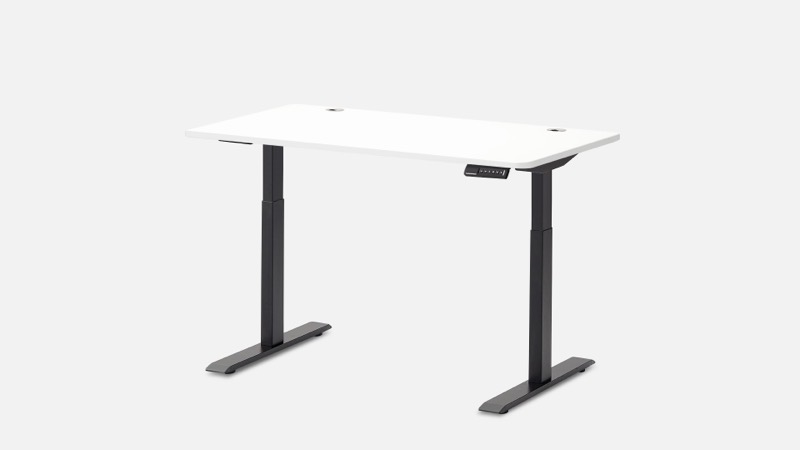
Autonomous SmartDesk Pro
- Fastest motor speed in class at 2.09 in/sec
- 4 programmable memory presets with anti-collision
- Competitive pricing in the $449 to $529 range
- BTOD WobbleMeter: ranked as one of the least stable standing desks ever tested
- Total wobble deflection of 18 at sitting height versus Uplift V2's 9, nearly double
- 59 dB noise is the loudest motor in this roundup
- Speed degrades significantly as load approaches the 310 lb rated maximum
- 7-year frame warranty and 2-year electronics warranty are the shortest in class
- Heavy marketing spend relative to engineering investment
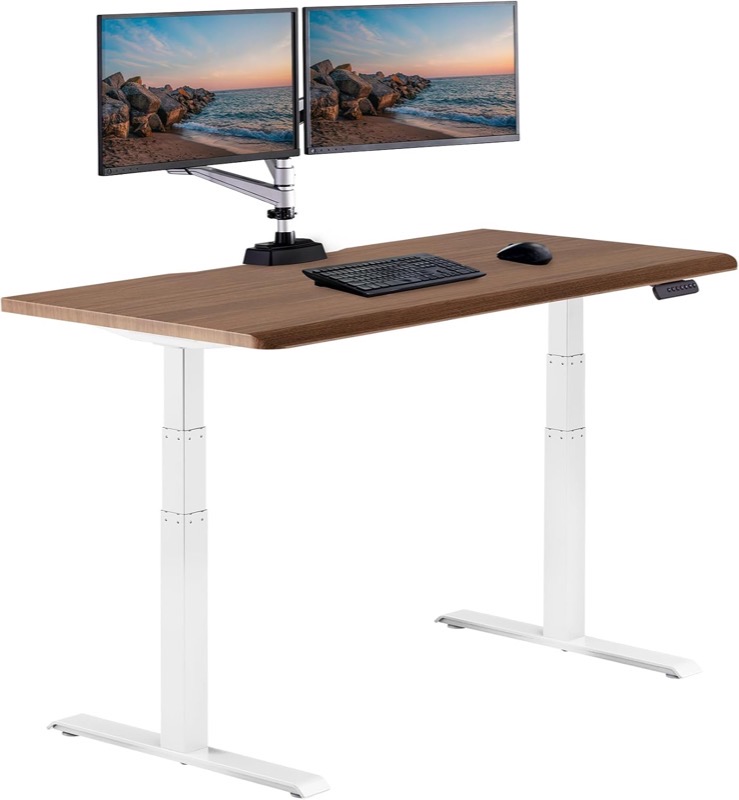
VertDesk v3
- German Ketterer single motor: BTOD tested it lifting 350 lbs at 1.27 in/sec with overload protection disabled
- External motor design makes replacement easier and cheaper than internalized dual-motor columns
- Made in USA (assembled in Georgetown, Texas)
- BTOD WobbleMeter score of 116 makes it the 3rd most stable desk ever tested
- Overload protection prevents motor damage from excessive weight
- Single motor means slower transitions at 1.27 in/sec versus dual-motor desks at 1.3 to 1.6 in/sec
- 275 lb rated capacity is lower than Uplift (355 lb) and FlexiSpot E7 Pro (440 lb)
- Sold exclusively through BTOD.com, which also manufactures it (conflict of interest in their reviews)
- Starting price around $700 is higher than better-known competitors
- Single motor has one point of failure versus distributed load on dual motors
- Less desktop variety compared to Uplift's 20+ options
Research Methodology
Products identified from BTOD.com WobbleMeter testing, CNET lab reviews, Wirecutter long-term picks, Business Insider multi-tester methodology, and r/StandingDesk community reports. Motor OEM provenance traced through BTOD factory tours, Jiecang product documentation, and Alibaba engineering articles. Stability data sourced from BTOD's standardized WobbleMeter (50 lb dumbbell, 30x48 top, tested at 30/42/46 inch heights). Load calculations use IEC 60034-1 duty cycle standards and OEM dynamic/asymmetry multipliers. All product URLs and ASINs verified on 2026-03-23. No manufacturer samples or sponsorships.