The LED Face Mask Dose Calculator: Which Masks Actually Deliver a Therapeutic Dose?
We calculated the fluence. We checked the FDA filings. We found that the most powerful mask might be the worst choice.
Verdict: Quick Picks
Top recommendations at a glance
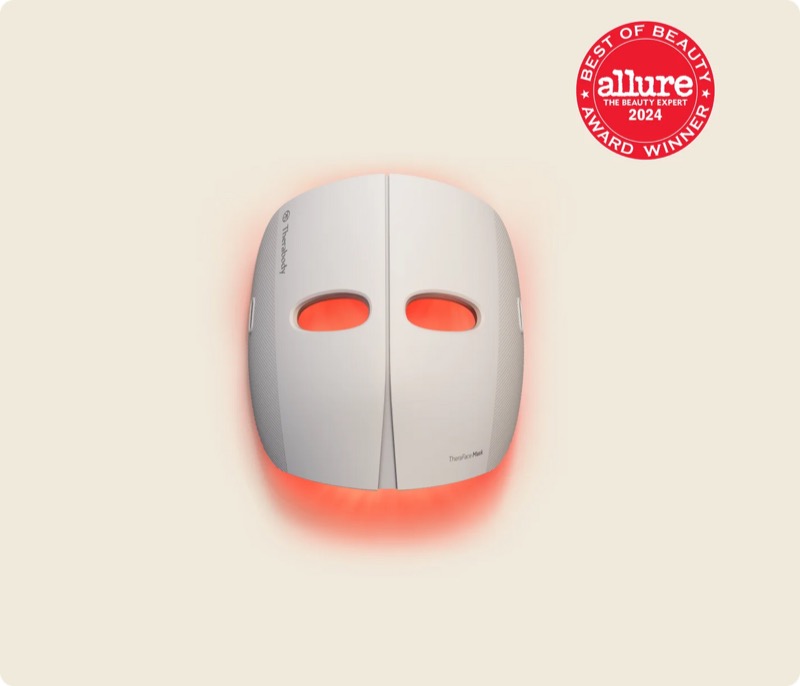
Therabody TheraFace Mask Glo
$299- 504 medical-grade LEDs for full-face coverage including under-eyes and jawline
- All three therapeutic wavelengths: 633nm red, 830nm NIR, 415nm blue
- Published irradiance: 73 mW/cm2 red, 55 mW/cm2 NIR, 64 mW/cm2 blue (FDA 510(k) K230293)
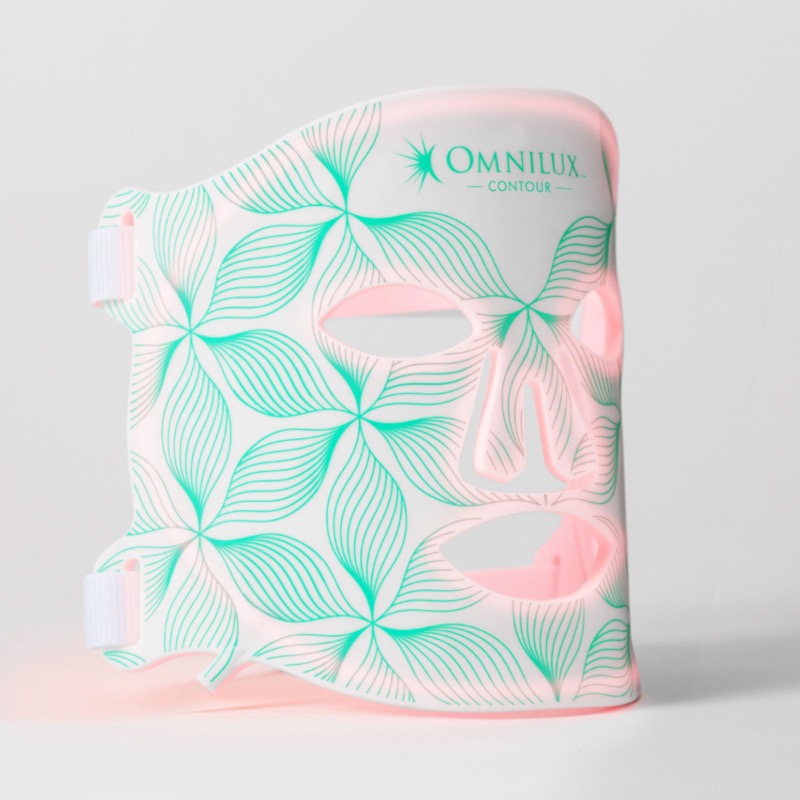
Omnilux Contour Face
$395- Most clinically credible brand in LED therapy: 40+ published studies, used in 5,000+ dermatology offices
- Flexible silicone conforms to facial contours for consistent LED-to-skin distance
- Two proven wavelengths: 633nm red + 830nm NIR
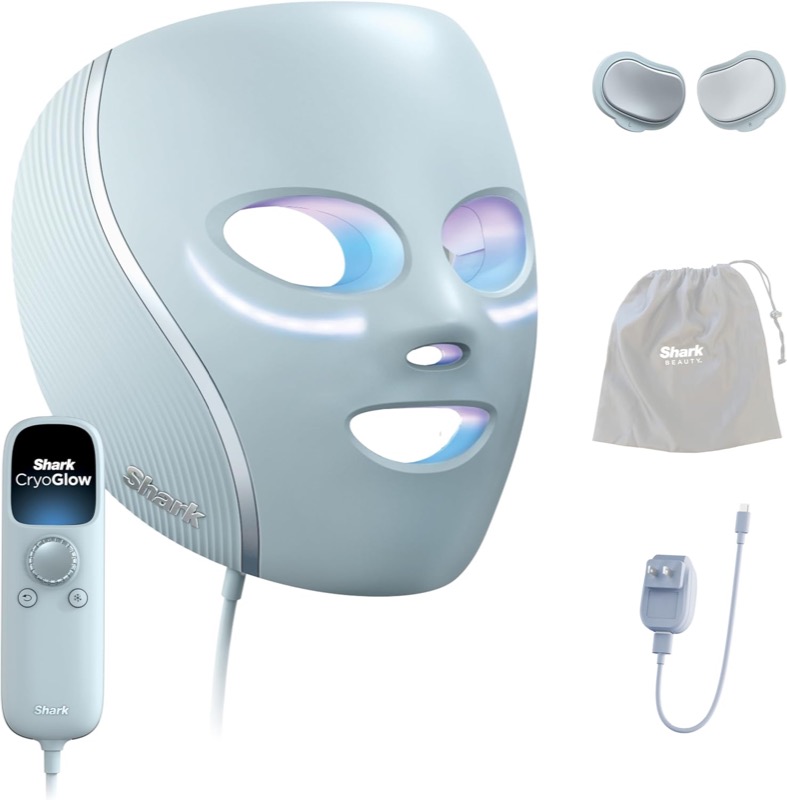
Shark CryoGlow
$349- Highest claimed irradiance of any consumer mask: 128 mW/cm2
- All three wavelengths: 415nm blue, 630nm red, 830nm NIR
- FDA cleared (510(k) K242796)
The One Number Nobody Calculates
Every LED face mask review compares wavelengths, LED counts, and comfort. Almost none calculate the actual fluence each mask delivers per session. Fluence is the total energy dose your skin receives, measured in joules per square centimeter (J/cm2). It is the single metric that determines whether a mask works or wastes your time.
Photobiomodulation follows a biphasic dose-response curve, first described by Arndt and Schulz and rigorously documented by Huang et al. (2009) at the Harvard/MGH Wellman Center for Photomedicine. The principle is straightforward: too little light does nothing, the right amount stimulates collagen synthesis and cellular repair, and too much light inhibits the very processes you are trying to trigger.
The therapeutic window for skin rejuvenation is approximately 4-15 J/cm2 per session, with a sweet spot around 5-10 J/cm2 (Zein et al. 2018, Bragato et al. 2025). Above roughly 20 J/cm2, you enter territory where the biphasic response may flip from stimulatory to inhibitory.
More powerful is not always better. That is the insight every other review misses.
The Math: Fluence Per Session
The formula is simple:
Fluence (J/cm2) = Irradiance (mW/cm2) x Time (seconds) / 1000
Irradiance is how much light energy hits your skin per unit area per second. Fluence is the total dose. Both matter, but fluence is what the clinical literature actually uses to define therapeutic windows.
We calculated the fluence for every mask with published irradiance data:
TheraFace Mask Glo (73 mW/cm2 red, 4-min red cycle): 73 x 240 / 1000 = 17.5 J/cm2. NIR cycle (55 mW/cm2, 4 min): 13.2 J/cm2. Above the sweet spot but within the broader therapeutic range.
Omnilux Contour Face (30 mW/cm2, 10 min): 30 x 600 / 1000 = 18 J/cm2. Similar to TheraFace despite lower irradiance, because longer treatment time compensates.
CurrentBody Series 2 (30 mW/cm2, 10 min): 18 J/cm2. Same irradiance and treatment time as Omnilux.
Shark CryoGlow (128 mW/cm2 claimed, 6-min Better Aging mode): 128 x 360 / 1000 = 46.1 J/cm2. Three times the upper bound of the therapeutic window. If these numbers are real, this mask delivers an inhibitory dose.
Dr. Dennis Gross SpectraLite (irradiance undisclosed, 3 min): Unknown. Cannot calculate fluence without irradiance data. This alone should give you pause.
The critical takeaway: the Shark CryoGlow, marketed as the most powerful consumer mask, delivers either a dangerously high dose (if spec-sheet numbers are accurate) or a sub-therapeutic dose (if Rawlings’ independent testing is accurate). Neither scenario is good.
The Rawlings Bombshell
Ben Rawlings is a professional LED device designer who tested the Shark CryoGlow with a calibrated Jeti Specbos 2501 spectroradiometer. His findings, published on his site, are devastating:
At realistic wearing distance (16mm from LEDs to skin), the actual irradiance measured:
- Red (630nm): 2.1 mW/cm2 (vs. marketed ~73 mW/cm2 per wavelength)
- NIR (830nm): 1.9 mW/cm2
- Blue (415nm): 2.18 mW/cm2
- Combined fluence, Better Aging 6-min mode: 1.44 J/cm2
That is a 97% reduction from the marketed irradiance. The 1.44 J/cm2 measured fluence falls below the 4 J/cm2 minimum of the therapeutic window.
The discrepancy exists because manufacturer irradiance is measured at the LED surface (0mm distance). At actual wearing distance, the inverse-square law and the rigid mask’s gap between LEDs and skin dramatically reduce delivered energy. This is not unique to Shark. Every rigid mask with significant LED-to-skin distance will show similar drop-offs. The difference is that Shark markets the 0mm number as if it represents what your skin receives.
This finding reframes the entire question. The real differentiator is not which mask has the highest irradiance spec, but which mask is designed to minimize the gap between LED surface and skin while having clinical validation at its actual delivered dose.
What the Science Actually Says
The Wavelengths That Matter
Not all colors of light do the same thing. The evidence hierarchy is clear:
Red (630-660nm): The strongest clinical evidence. Penetrates 8-10mm into skin, reaching the dermis where fibroblasts produce collagen. A meta-analysis by Ngoc et al. (2023) confirmed statistically significant wrinkle reduction with high consistency across studies. Bragato et al. (2025) demonstrated significant results in a 95-woman RCT using just 6.4 mW/cm2 for 21 minutes (8.05 J/cm2 fluence), proving even modest irradiance works with sufficient treatment time.
Near-Infrared (830nm): Penetrates deeper than red into subcutaneous tissue. Combined with red, it has strong evidence for anti-aging. Wunsch & Matuschka (2014) showed red + NIR treatment produced significant improvements in complexion, wrinkle depth, and collagen density versus control.
Blue (415nm): Moderate evidence for mild-to-moderate acne. Blue light excites porphyrins naturally produced by Cutibacterium acnes, generating singlet oxygen that kills the bacteria. However, the Scott et al. (2019) meta-analysis flagged overall low evidence quality.
Deep NIR (1072nm): Used exclusively by CurrentBody Series 2. Limited peer-reviewed evidence for this specific wavelength in skin applications. Promising but unproven compared to 633/830nm.
The Dose-Response Problem
Grimes (2025) published a devastating methodological critique of the LED therapy literature. Across 27 studies: median sample size was 26 patients, fluences and wavelengths varied wildly between studies, and many lacked proper blinding or standardized outcome measures.
The honest conclusion: LED photobiomodulation for skin rejuvenation works, but the evidence base is weaker than the marketing suggests. The mechanism is real (cytochrome c oxidase in Complex IV of the mitochondrial electron transport chain). The clinical execution is messy.
The Marketing BS Detector
FDA Approved vs. FDA Cleared
LED masks receive FDA 510(k) clearance, not FDA approval. These are fundamentally different pathways. 510(k) clearance means the device is substantially equivalent to a device already on the market. It does not mean the FDA tested the product, endorsed its efficacy claims, or verified that it actually works as advertised. Every major mask in this roundup is FDA cleared. None are FDA approved.
The Irradiance Transparency Test
If a manufacturer does not publish irradiance (mW/cm2), you cannot calculate the dose your skin receives. Without dose, you cannot know if the device is therapeutic or decorative. Three major brands fail this test:
- Dr. Dennis Gross: Irradiance not disclosed. At $455, this is unacceptable.
- JOVS: Irradiance not disclosed. Confusing product lineup makes it worse.
- Solawave: Claims to be more than twice as powerful as competitors without publishing actual numbers.
Compare this to Therabody, which publishes irradiance per wavelength in their FDA 510(k) filing (K230293), verified by independent reviewer GoalsToGetGlowing.
LED Count Is Marketing, Not Science
A mask with 500 weak LEDs may deliver less therapeutic energy than one with 132 properly engineered LEDs at the correct wavelength and irradiance. LED count tells you nothing about dose. Irradiance at the skin surface tells you everything.
Cryo Is Not Synergistic
The Shark CryoGlow’s under-eye cooling pads provide temporary vasoconstriction that may reduce puffiness. There is no published evidence that combining cryotherapy with LED therapy produces synergistic skin rejuvenation effects. Worse, the cooling pads physically block LEDs from treating the under-eye and cheek areas, the most important zones for anti-aging.
Why TheraFace Wins
The TheraFace Mask Glo is not the cheapest mask, nor the most powerful on paper. It wins because it is the most transparent, the most complete, and the best value when you look at the data instead of the marketing.
It publishes irradiance per wavelength. It includes all three evidence-backed wavelengths (red, NIR, blue). It has the largest clinical study of any consumer LED mask (104 subjects, 12 weeks). It covers the full face including areas most masks miss. And at $299 (sale), it undercuts the Omnilux by $96 and the CurrentBody by $171 while offering more LEDs, more wavelengths, and documented specs.
The Omnilux earns runner-up on clinical credibility alone. Forty-plus published studies and deployment in 5,000+ dermatology offices is a pedigree no other brand matches. If your priority is the brand your dermatologist trusts, Omnilux is the answer.
The CurrentBody Series 2 gets points for spec transparency and the unique 1072nm wavelength, but the premium price and limited evidence for deep NIR keep it behind the leaders.
The Shark CryoGlow is a cautionary tale about spec-sheet irradiance versus delivered dose. The Dr. Dennis Gross SpectraLite is a $455 mask from 2017 that lacks NIR, hides its irradiance, and has the lowest user ratings in the category.
The Consistency Factor
One finding that gets buried in the clinical literature deserves emphasis: treatment consistency matters more than single-session intensity.
The Bragato et al. (2025) RCT showed statistically significant results with just 6.4 mW/cm2 at 21 minutes per session. That is a modest irradiance by any standard. The key was consistent use: 2-3 sessions per week for 4+ weeks.
Every clinical trial showing positive results used protocols of 3-5 sessions per week for 4-8+ weeks. No study has shown meaningful results from occasional use. Pick a mask you will actually use regularly, not the one with the highest spec-sheet numbers.
What We Would Change
If we were designing the perfect consumer LED mask:
- Publish irradiance measured at wearing distance, not at the LED surface. This is the only honest metric.
- Target 5-10 J/cm2 fluence per session for anti-aging. Design the irradiance and treatment time to hit this window.
- Flexible silicone only. Rigid shells create variable LED-to-skin distances that make dose prediction impossible.
- Red (633nm) + NIR (830nm) mandatory. Blue (415nm) optional for acne. Skip marketing wavelengths without evidence (green, yellow, deep NIR until more data exists).
- Include a Veritace-style verification card so users can confirm their specific unit performs to spec.
No mask on the market does all five. The TheraFace comes closest on specs and transparency. The CurrentBody comes closest on verification.
Analysis: Product Breakdown
Individual teardown and verification results
Therabody TheraFace Mask Glo
- 504 medical-grade LEDs for full-face coverage including under-eyes and jawline
- All three therapeutic wavelengths: 633nm red, 830nm NIR, 415nm blue
- Published irradiance: 73 mW/cm2 red, 55 mW/cm2 NIR, 64 mW/cm2 blue (FDA 510(k) K230293)
- Largest clinical study of any LED mask: 104 subjects, 12 weeks, 80% reported fine line improvement
- 12-minute preset cycles through red, red+NIR, and blue automatically
- Cordless, USB-C charging, VibraWave scalp massage
- Best price-to-spec ratio in the premium tier at $299 (sale)
- Gets warm during extended use, may concern melasma patients
- Red fluence at 17.5 J/cm2 per 4-min cycle exceeds the 5-10 J/cm2 sweet spot
- 514g weight is heavier than flexible silicone competitors
- Relatively new product (October 2025) with limited long-term user feedback
- MSRP is $380; the $299 sale price is not guaranteed to persist
Omnilux Contour Face
- Most clinically credible brand in LED therapy: 40+ published studies, used in 5,000+ dermatology offices
- Flexible silicone conforms to facial contours for consistent LED-to-skin distance
- Two proven wavelengths: 633nm red + 830nm NIR
- Eye-safe per IEC/EN 62471 standard
- Fluence of 18 J/cm2 in 10 minutes is within the broader therapeutic range
- 2-year warranty, 2,000+ reviews with 4.6-star average
- No blue (415nm) light for acne treatment
- Lower irradiance (30 mW/cm2) means longer 10-minute sessions
- At $395, costs 30% more than the TheraFace Mask Glo
- Only 132 LEDs in 66 dual-chip bulbs; less coverage area than 500+ LED competitors
- Fluence at 18 J/cm2 is above the 5-10 J/cm2 optimal sweet spot
Shark CryoGlow
- Highest claimed irradiance of any consumer mask: 128 mW/cm2
- All three wavelengths: 415nm blue, 630nm red, 830nm NIR
- FDA cleared (510(k) K242796)
- Cryo cooling pads may temporarily reduce under-eye puffiness
- USB-C cordless, multiple treatment modes (4-15 minutes)
- Independent testing by Ben Rawlings (spectroradiometer) found actual irradiance 97% lower at wearing distance
- Calculated fluence at wearing distance: ~1.44 J/cm2, below the 4 J/cm2 therapeutic minimum
- Cryo cooling pads physically block light from key treatment areas (under-eye, cheek, glabella)
- Marketing irradiance measured at LED surface (0mm), not at skin
- If spec-sheet irradiance were accurate, 46.1 J/cm2 fluence would be well into the inhibitory zone
- Rigid hard shell with less facial conformity than flexible masks
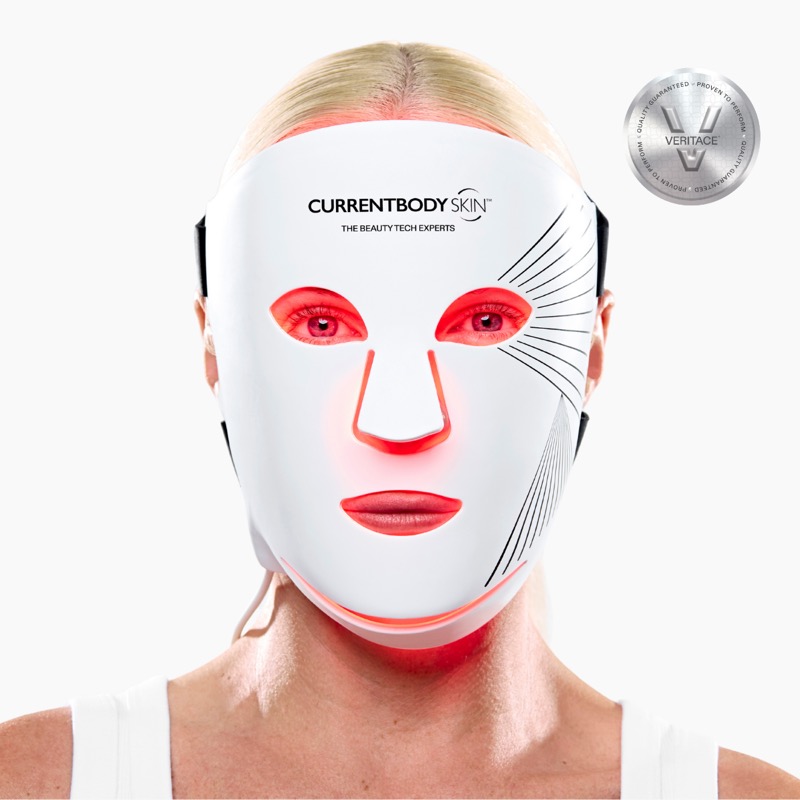
CurrentBody Skin LED Light Therapy Mask: Series 2
- Only consumer mask with 1072nm deep near-infrared (3-wavelength anti-aging)
- 236 LEDs with published irradiance (30 mW/cm2) and wavelength specs
- Veritace NFC card lets you verify your individual mask's LED test results
- Flexible silicone with chin strap for improved coverage
- Strong editorial endorsements: 3-year Glamour UK editor test, Kim Kardashian, Halle Berry
- 1072nm deep NIR has limited peer-reviewed evidence compared to 633/830nm
- Most expensive mask in this roundup at $470
- 30 mW/cm2 irradiance is on the lower end; requires 10-minute sessions
- Fluence of 18 J/cm2 is above the 5-10 J/cm2 sweet spot
- Celebrity endorsements are not clinical evidence
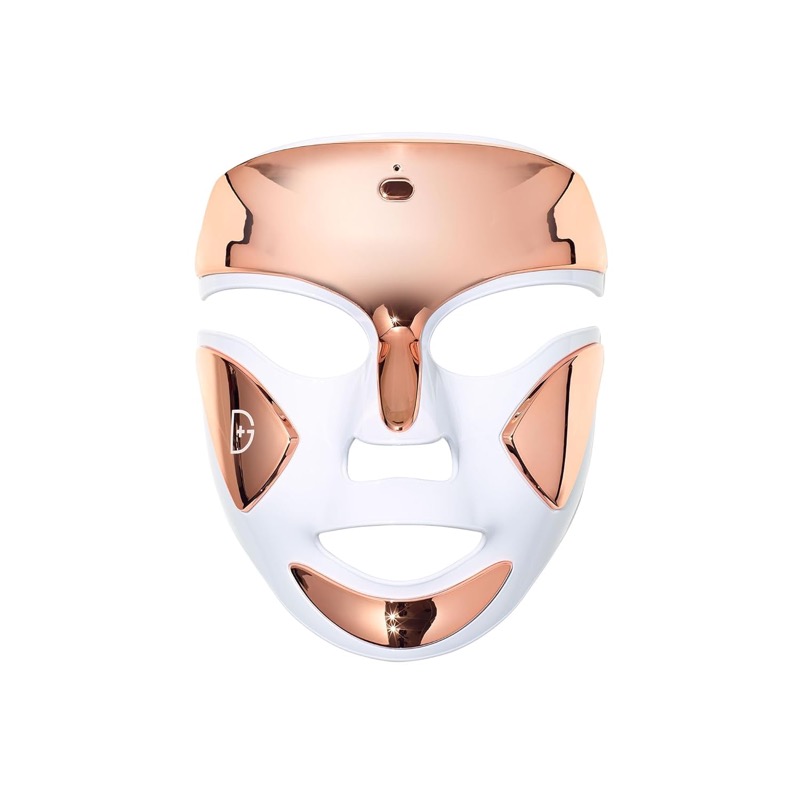
Dr. Dennis Gross DRx SpectraLite FaceWare Pro
- Fastest treatment time at 3 minutes per session
- Strong brand recognition in dermatology
- FDA cleared since 2017 (510(k) K171386)
- 162 LEDs: 100 red (630nm) + 62 blue (415nm)
- No near-infrared (830nm) wavelength, the most evidence-backed for anti-aging
- Irradiance not disclosed by manufacturer, a critical transparency failure
- Cannot calculate fluence without irradiance data, making efficacy unverifiable
- Most expensive mask in this roundup at $455 for fewer features
- 3.7-star Amazon average (572 reviews), lowest among competitors
- Rigid shell limits facial conformity
- Oldest design in the roundup (2017), no significant hardware updates
Research Methodology
Products identified from dermatology review sites, Amazon bestseller data, and professional LED device testing channels. Irradiance specifications verified against FDA 510(k) filings, manufacturer product pages, and independent spectroradiometer testing (Ben Rawlings). Fluence calculations use published irradiance and recommended treatment times. Clinical evidence sourced from PubMed, PMC, and peer-reviewed journals. All product URLs and ASINs verified on 2026-03-22. No manufacturer samples or sponsorships. Coming soon: independent verification with a Spectryx Blue Mobile Spectrometer (350-850nm, Bluetooth).